 POTS
POTSFREE · BY A CARDIOLOGIST
Your heart races when you stand. Now what?
Check my numbers · No sign-up. Nothing here diagnoses you.

The 1-minute story
1 / 6 · scroll or tap
Lying down, blood spreads evenly.
- Lying down, blood spreads evenly.
- Standing, about half a liter of blood slides toward the legs.
- Pressure sensors in the neck and chest notice and signal the brain.
- Vessels tighten and the heart adds a few beats.
- In POTS, heart rate climbs 30 or more within 10 minutes, 40 for ages 12 to 19, and symptoms follow.
- Trials tested fluids, salt, compression and exercise.
Quick answers.
What is POTS?
POTS (postural orthostatic tachycardia syndrome) is a form of dysautonomia. Your heart rate climbs sharply when you stand, and you feel symptoms such as dizziness, fatigue, palpitations or brain fog. Clinicians diagnose it from a measured heart rate rise plus symptoms, after they exclude other causes.
Read the plain-language explanationWhat heart rate rise counts as POTS?
Published criteria describe a sustained rise of at least 30 beats per minute within 10 minutes of standing in adults, or at least 40 for ages 12 to 19, without a blood pressure drop that would indicate orthostatic hypotension. Symptoms must last at least 3 months (some criteria say 6), and a clinician must rule out other causes. Only a doctor can interpret your numbers.
Compare your numbers with the criteriaIs it anxiety?
Anxiety and POTS can look alike and can occur together. A measured heart rate on standing helps separate them better than a description of symptoms does, so ask your clinician to record lying and standing heart rate and blood pressure.
Do I have POTS? What to check firstCan I test for POTS at home?
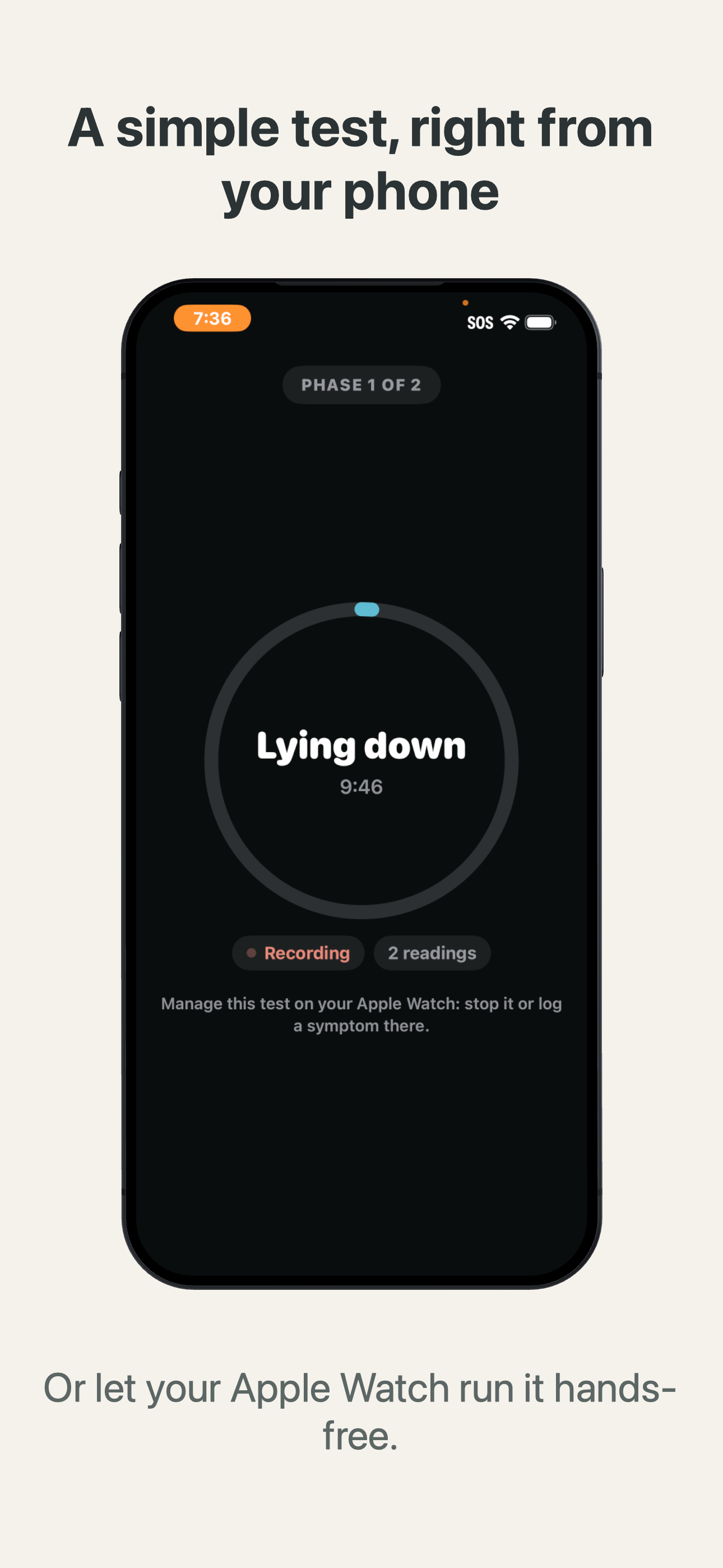
You can run a stand test at home: lie down and rest, then stand still for 10 minutes while you record heart rate and, if you can, blood pressure. A home test cannot diagnose POTS. It gives you and your doctor a measured record, which helps more than a description from memory.
Read the home stand test guideWhat helps POTS?
Guidelines start with fluids, added salt when your doctor agrees, compression garments and graded exercise. Clinicians sometimes add medicines off label, and no drug has FDA approval for POTS. Treatment depends on your symptoms and your other conditions.
See each treatment and its evidenceWhat does the POTS app do, and what does it cost?
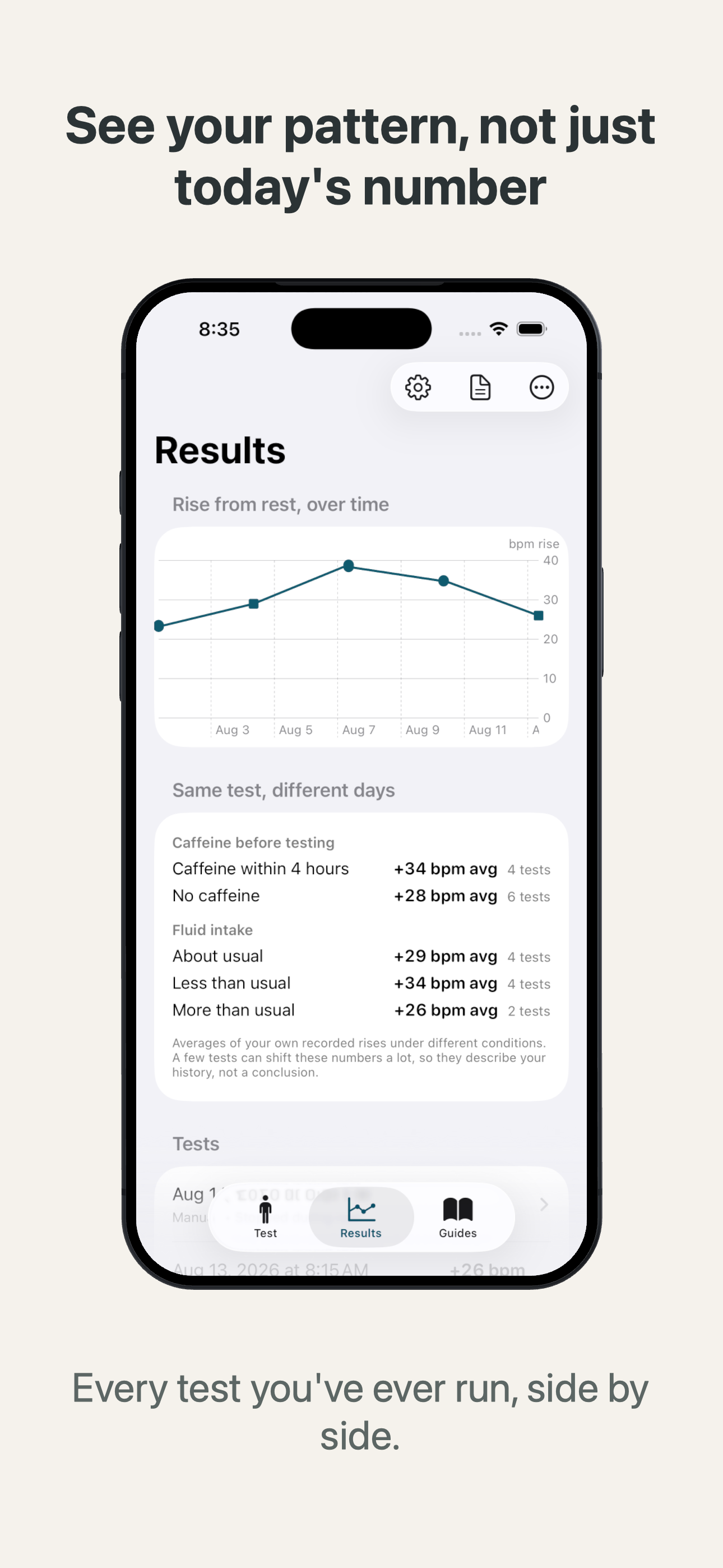
The free app guides a 20-minute stand test, graphs your heart rate and lets you mark symptoms. It records numbers and gives no diagnosis. A one-time $29 purchase unlocks PDF export, history beyond 30 days and insights. There is no subscription.
See the appTrack your stand tests at home.
The free POTS app guides a 20-minute stand test and graphs your heart rate. $29 once unlocks the report. It gives no diagnosis.

Looking for gear with trial support, such as compression garments or electrolyte mixes? See what we recommend and why